AOC AGON PRO AG276QZD2 Review: The Cheap QD-OLED Is Real, and So Are Its Corners
At $349.99 on sale, the AG276QZD2 is the least expensive QD-OLED gaming monitor we would buy. Here is what the 1440p panel does well and where AOC saved money.
The verdict
The cheapest QD-OLED gaming monitor that we would still recommend. Motion, contrast and input lag are in the same league as dearer panels, and the three-year burn-in warranty helps. The cuts are real: no HDMI 2.1, no USB-C, modest SDR brightness and a glossy coat that picks up room light.
Best forPC players on a budget who want OLED motion at 1440p
What we liked
- Measured 0.50 ms average response and near-zero input lag at 240Hz
- Three-year warranty that explicitly covers OLED burn-in
- True-black HDR 400 certification with about 900 nits peak in tests
- Often discounted to $349.99 from the $499.99 list price
What we did not
- HDMI ports are limited to 144Hz, so consoles do not get 120Hz at 1440p
- SDR brightness measured about 223 nits, below rivals at 270 to 280
- Glossy coating shows reflections in a bright room
- No USB-C, no KVM switch and no black frame insertion
Somebody always has to be the cheapest, and in QD-OLED gaming monitors that somebody is AOC. The question is not whether the AG276QZD2 is affordable. It is whether the savings come out of the parts of the picture you care about.
The price, and the date it is true for
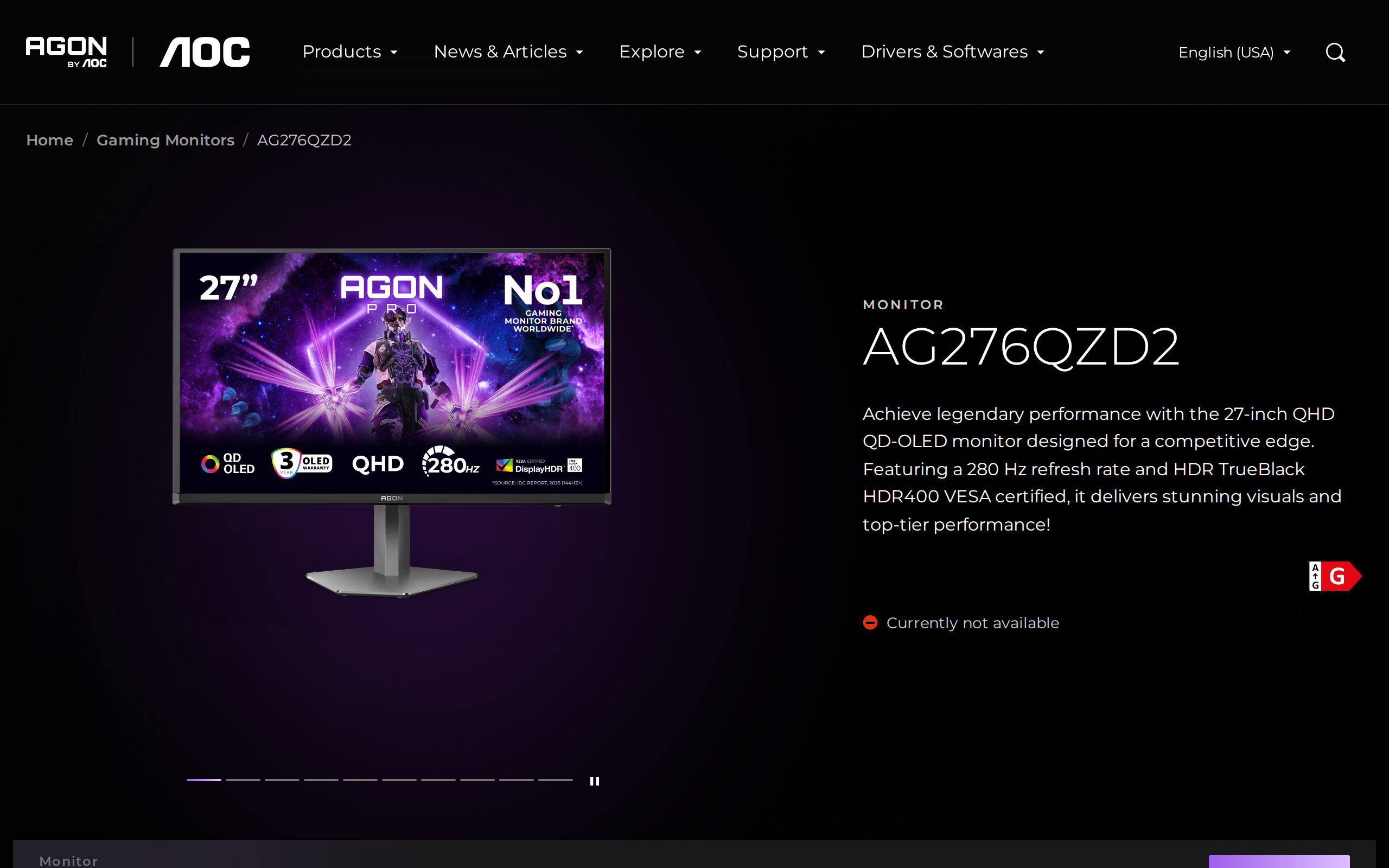
AOC's own page for the monitor no longer lets you buy it, so list price is a historical number: TFTCentral gave it as $499.99 at launch. Retailers have since pushed it lower. The Gadgeteer's September 2026 piece quotes $349.99 on Amazon, down from $499.99, and Tom's Hardware ran a $399 deal story earlier. Treat $349.99 as a sale price that comes and goes, not a promise.
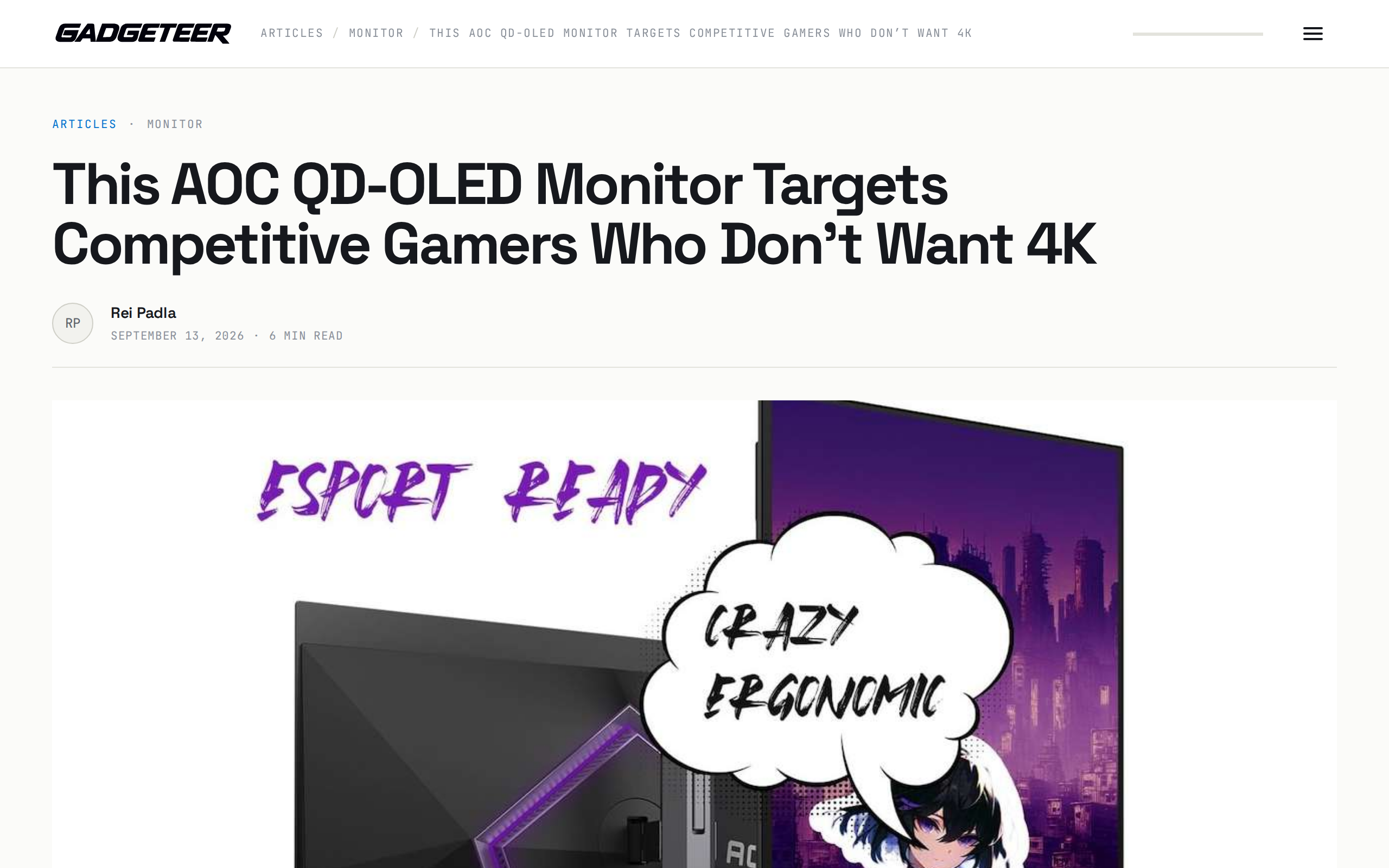
At the sale price it is the cheapest QD-OLED we know of. At $499.99 it is much less compelling.
What the lab numbers say
TFTCentral measured an average response time of 0.50 ms gray-to-gray, with the best case at 0.34 ms and no overshoot. Total display lag at 240Hz came in at 0.10 ms, which that site files under its fastest class. In plain words: you will not feel the screen as a delay.
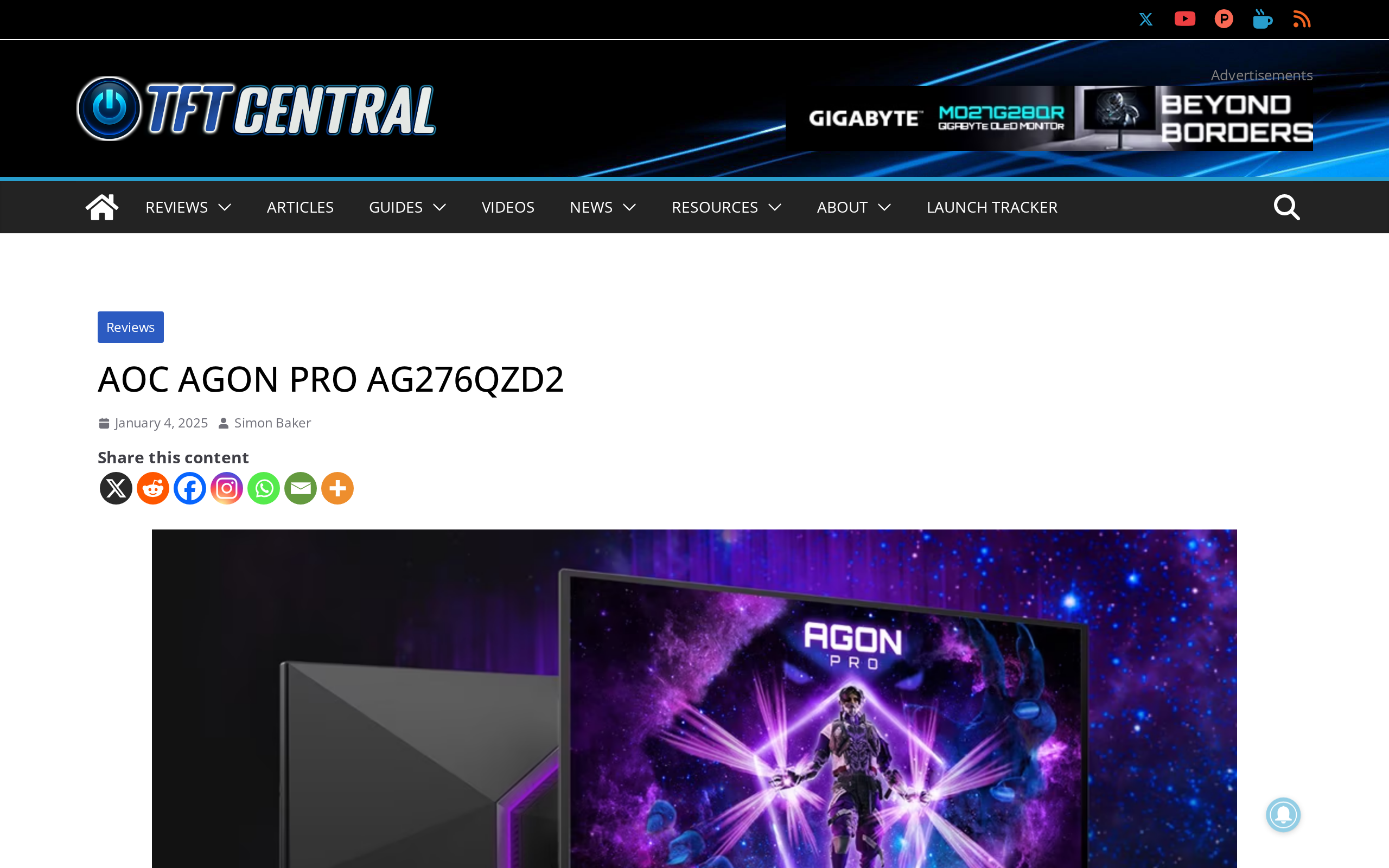
Brightness is the weaker half. In SDR it topped out at about 223 nits, under the 270 to 280 nits that rivals manage. HDR peak reached roughly 875 nits in one mode and 910 in another, short of the 1000 nits on the box. You get true-black HDR 400 certification, which is honest for an OLED, but do not expect a searing highlight in a sunlit room.
Where AOC cut
TFTCentral's list of what is missing reads like a checklist of what the dearer monitors add:
- No USB-C and no KVM switch.
- No black frame insertion mode.
- No motion sensor for the OLED care routines.
- HDMI capped at 144Hz, so a console tops out at 4K 60Hz over HDMI.
AOC's spec table says HDMI 2.1, yet the same page gives the HDMI range as 48 to 144Hz, and the marketing text says HDMI 2.0. We went with the lower reading. PC Monitors flagged the same gap and noted the monitor trails 360Hz rivals on refresh. If you plug in an Xbox or a PS5, this is the wrong panel.
Specs
- Panel
- 26.5-inch QD-OLED, 2560x1440
- Refresh rate
- 240Hz tested, 280Hz listed on AOC's US page
- Response time
- 0.50 ms average gray-to-gray (TFTCentral)
- HDR
- VESA DisplayHDR True Black 400
- Peak brightness
- 1000 nits rated, about 875 to 910 measured
- Colour
- 98.5% DCI-P3 per AOC, 99.1% per TFTCentral
- Inputs
- 2x DisplayPort 1.4, 2x HDMI capped at 144Hz
- USB
- USB 3.2 Gen 1 hub, 2 downstream ports
- Stand
- Tilt, swivel, pivot, 130 mm height, VESA 100x100
- Warranty
- 3 years including burn-in