AOC Gaming Q27G3XMN Review: Mini-LED HDR for Around $220, With Honest Limits
A 27 inch 1440p VA panel with 336 mini-LED zones and 180 Hz, listed from $218.49. TFTCentral measured 1,365 nits in HDR. We look at what that buys you, where blooming shows up and who should wait for OLED.
The verdict
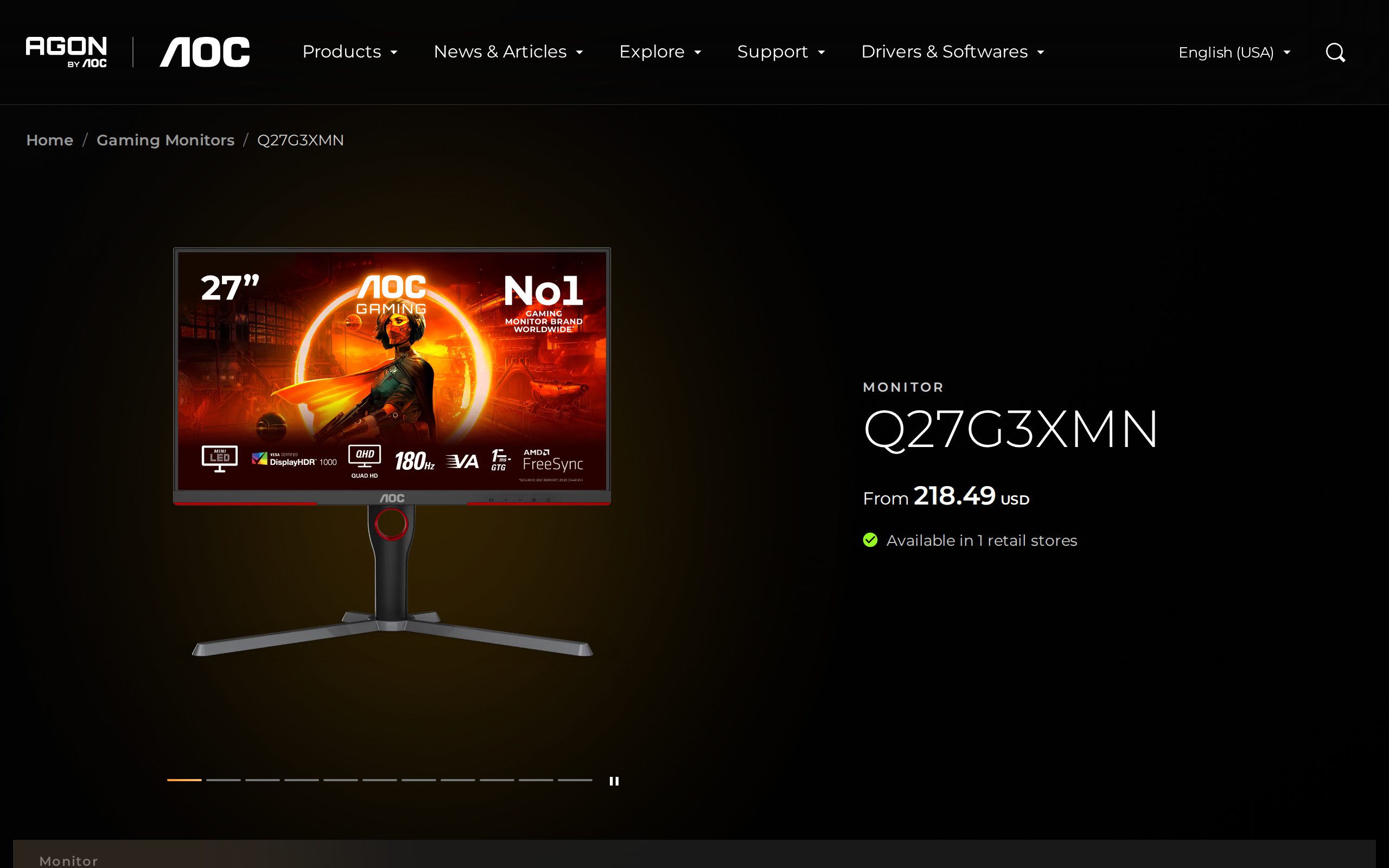
The cheapest way to see real HDR on a 1440p gaming monitor. 336 dimming zones, up to 1,365 nits measured and 180 Hz with low input lag put it well ahead of any edge-lit panel at the price. It blooms around small bright objects, the menu is fiddly, and HDMI tops out at 144 Hz. Buy it for HDR on a budget, not for OLED black.
Best forBudget players who want real HDR and 180 Hz at 1440p
What we liked
- 336-zone mini-LED backlight, far beyond the 8 or 16 zones of edge-lit rivals
- TFTCentral measured 1,365 nits peak in HDR, above the DisplayHDR 1000 bar
- 180 Hz over DisplayPort with about 3.3 ms input lag
- Strong static contrast for VA: about 3,565:1 native
- Full stand: tilt, swivel, pivot and 130 mm of height travel
What we did not
- Blooming still shows around small bright objects on a dark scene
- HDMI 2.0 only, which caps the refresh rate at 144 Hz
- The on-screen menu is cumbersome to navigate
- VA panel means narrower viewing angles and some black smearing
- Street price can sit above the $218.49 list price
HDR on a monitor has been a bad joke for years. Plenty of screens carry an HDR badge and do little more than make the picture grey. The Q27G3XMN is one of the few cheap ones that earns the badge, and the reason is a backlight made of 336 individually controlled mini-LED zones.
Why 336 zones matter
Most cheap HDR monitors use an edge-lit backlight with 8 or 16 dimming zones. Switch off one zone and a whole strip of the screen goes dark with it. A grid of 336 zones can dim the area behind a dark sky and light the area behind the sun, which is what makes HDR look like HDR.
TFTCentral measured a peak of 1,365 nits in HDR, well above the 1,000 nits that DisplayHDR 1000 asks for. Native static contrast came in at 3,565:1, strong for a VA panel, and the dimming pushes it far higher in HDR scenes. AOC rates the panel at 700 cd/m2 peak, so the measured figure is a pleasant surprise, not a given.
Where the bloom still shows
336 zones is not 2,000. The best mini-LED panels carry thousands, and on this one a small bright object on a black background, such as a cursor, a crosshair or subtitles, can lift the zone around it. Blooming is low in normal scenes and visible in that specific case.
If you play dark horror games or watch a lot of letterboxed films in a dark room, an OLED still wins on black level. If your games are bright, colourful shooters and open-world titles, you will rarely see the problem.
Speed is good, but not everywhere
The panel runs at 180 Hz over DisplayPort 1.4 with an input lag of 3.29 ms at 180 Hz by TFTCentral's measurement, which puts it in the competitive class. Response time averaged 5.2 ms at the medium overdrive setting against the 1 ms GtG on the box. Marketing numbers use the best case, and measured numbers are the ones to trust.
HDMI is the catch. The inputs are HDMI 2.0, which tops out at 144 Hz at 1440p, so a console or a second PC on HDMI will not see 180 Hz. The monitor has one DisplayPort 1.4 and two HDMI 2.0 ports, no USB-C and no HDMI 2.1. Variable refresh runs from 48 to 180 Hz on DisplayPort.
Specs
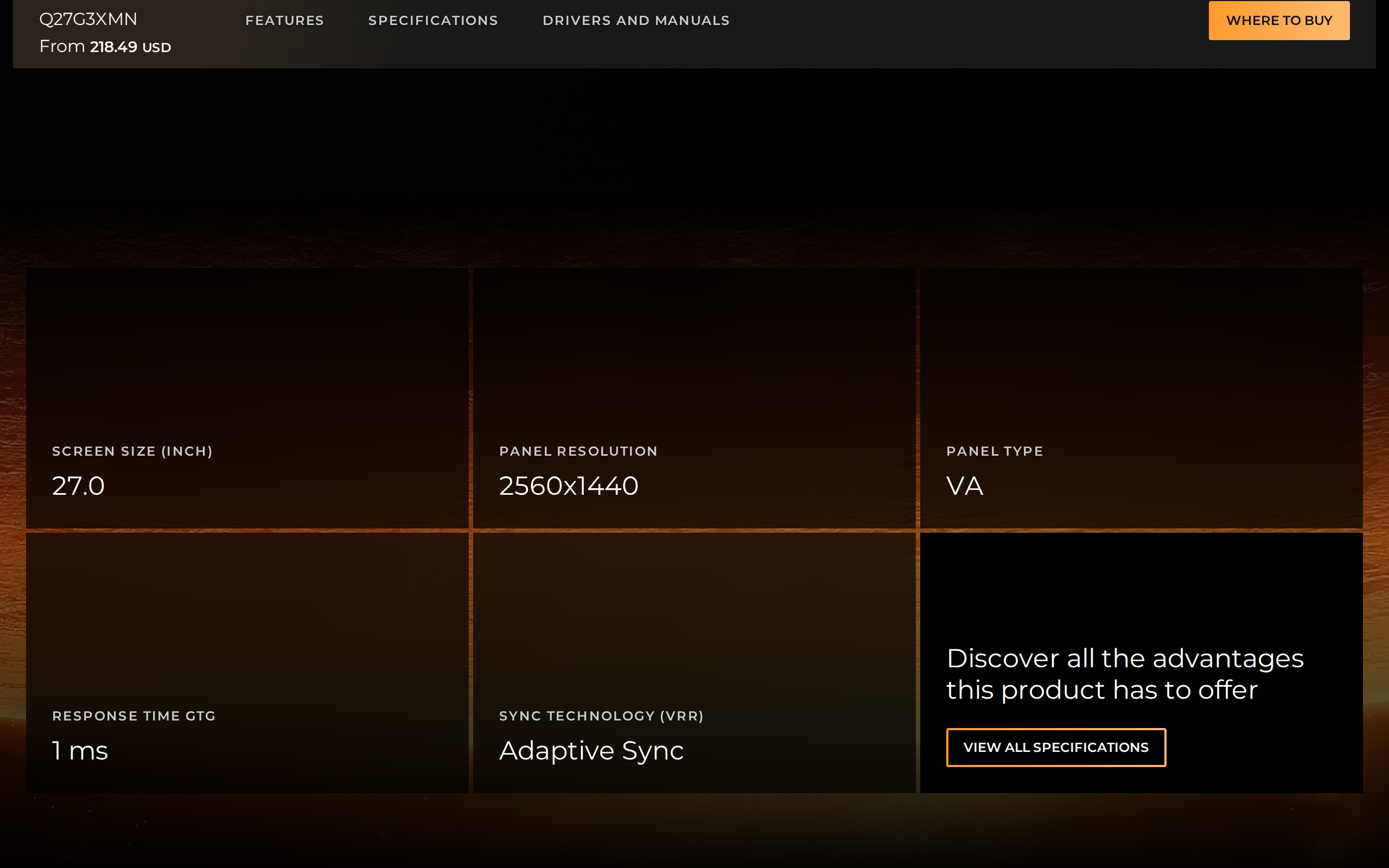
- Panel
- 27 inch VA, 2560x1440
- Refresh rate
- 180 Hz on DisplayPort, 144 Hz on HDMI
- Response time
- 1 ms GtG rated, 5.2 ms measured average (TFTCentral)
- Backlight
- Mini-LED, 336 local dimming zones
- HDR
- VESA DisplayHDR 1000, 700 cd/m2 rated peak
- Peak HDR brightness
- 1,365 nits measured (TFTCentral)
- Contrast
- 4000:1 rated, 3,565:1 measured native
- Colour
- 137.5% sRGB rated, 97.4% DCI-P3 measured
- Inputs
- 1x DisplayPort 1.4, 2x HDMI 2.0
- Stand
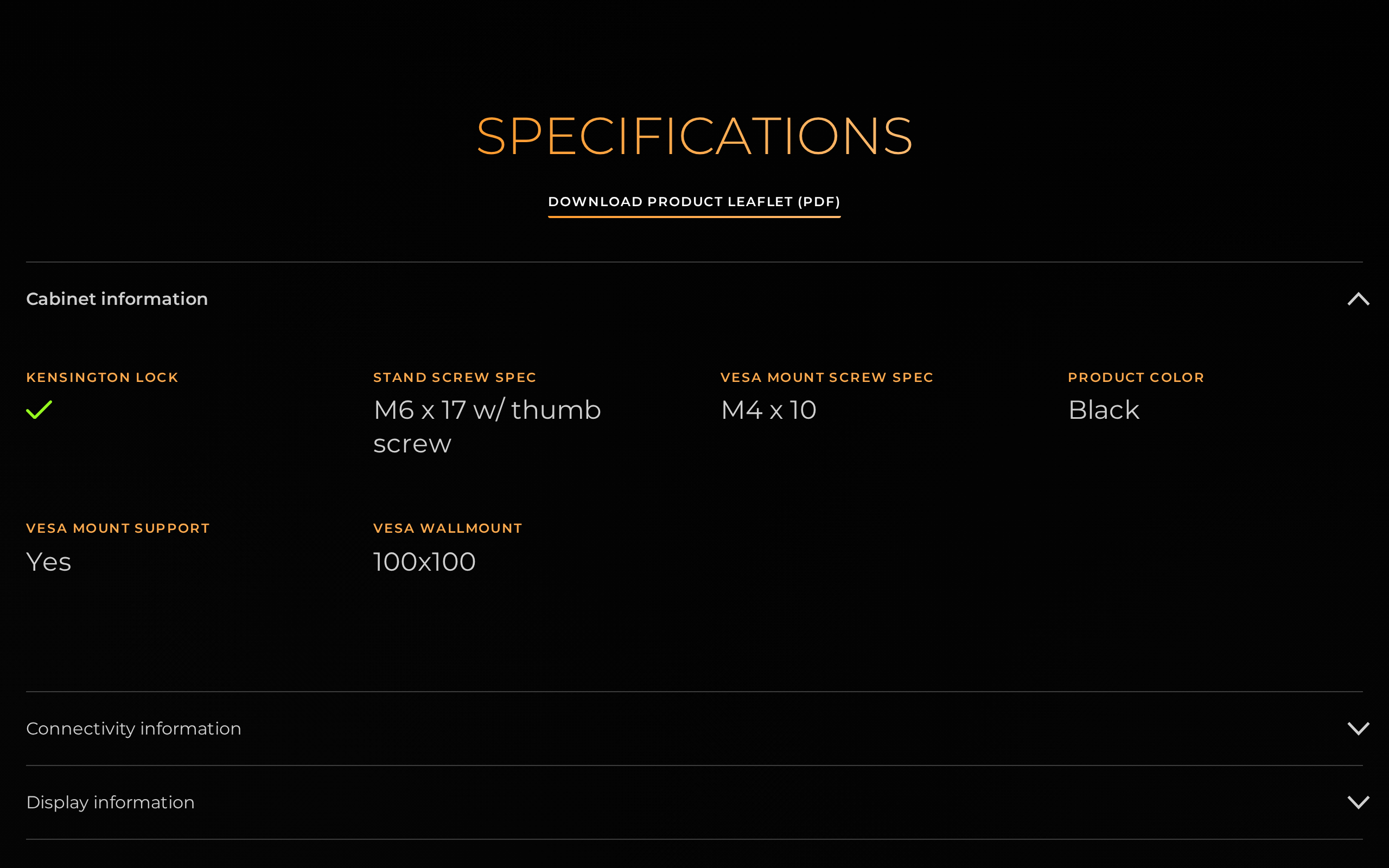
- Tilt, swivel, pivot, 130 mm height; VESA 100x100