Samsung Odyssey OLED G6 (G60SF) Review: 500Hz Is Real, the Matte Coat Has a Price
A 27-inch QD-OLED that runs 1440p at 500Hz with a glare-free finish. We weigh what the extra refresh buys over 360Hz panels, what the matte layer takes from black levels, and who needs a GPU this fast.
The verdict
The fastest 27-inch OLED you can buy in its class, and the matte coat is a real help in bright rooms. It costs you some black depth by day, the VRR flicker is worse than rivals, and it only pays off if your GPU can feed 300fps or more. At the sale price it is easy to like, at list it is a hard sell.
Best forCompetitive players with a high-end GPU in a bright room
What we liked
- 500Hz at 2560x1440 with a rated 0.03ms response time
- Fully matte QD-OLED finish cuts reflections in bright rooms
- 99.5% DCI-P3 coverage and a 1.13 average Delta E in Expert Reviews' tests
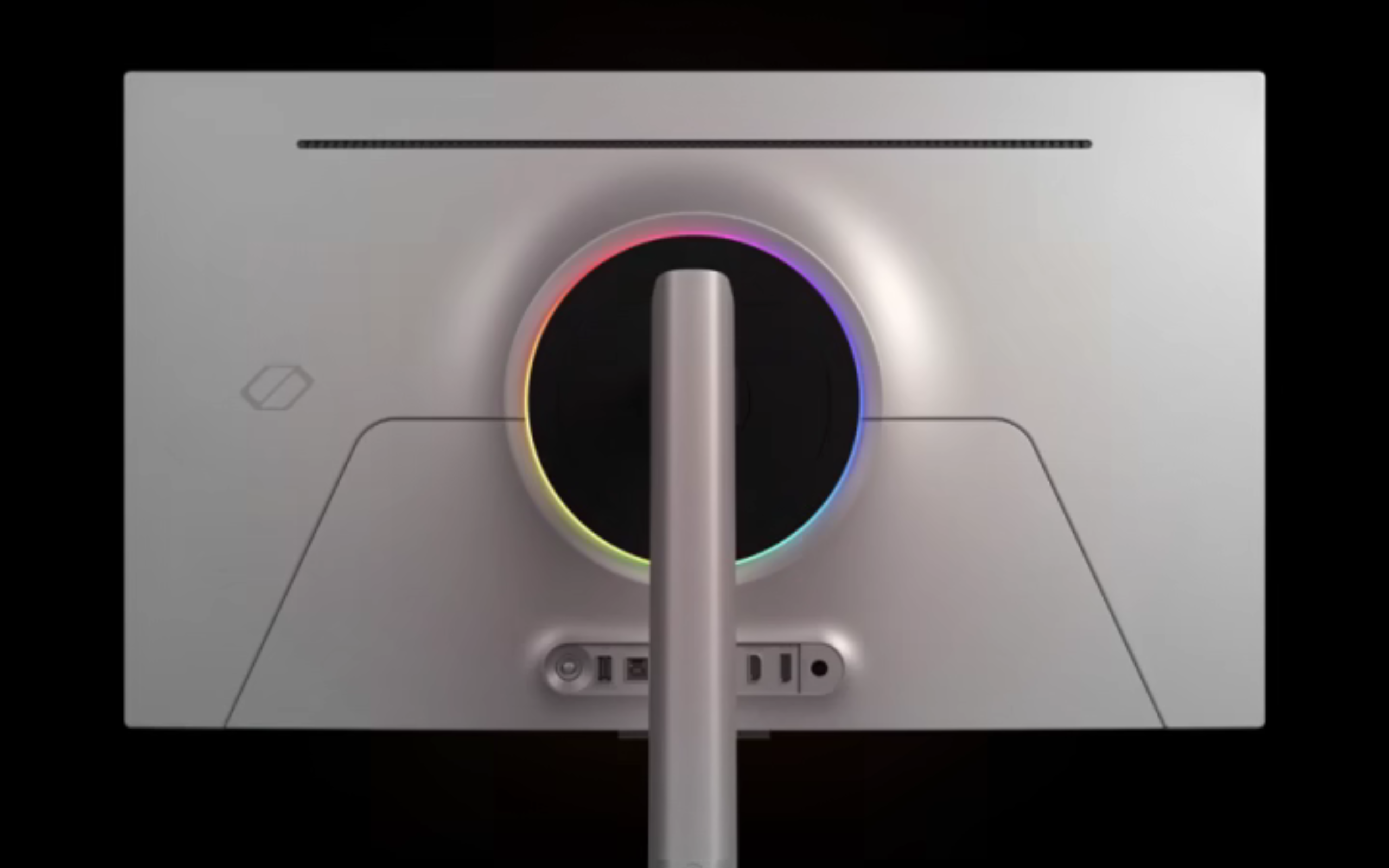
- Two HDMI 2.1 ports and a DisplayPort 1.4, plus 120mm of height adjustment
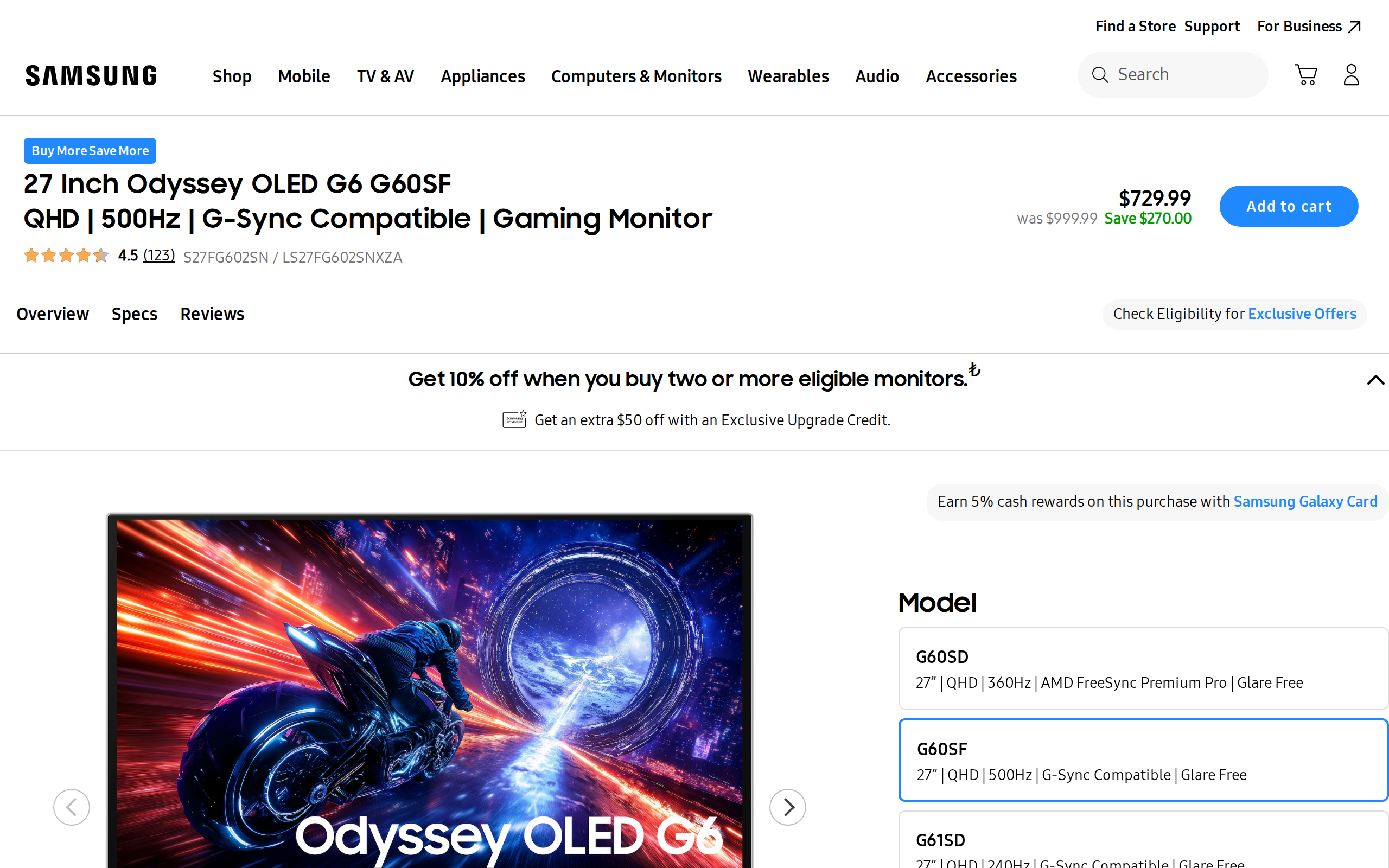
- Street price has fallen $270 below list on Samsung's own store
What we did not
- Matte layer lifts black levels and adds a purple tinge in lit rooms
- Noticeable VRR flicker in dark and mid tones with G-Sync on
- No USB-C input and a loose-feeling port panel on one review sample
- Needs a 140W external brick and a very fast GPU to use 500Hz
Start with the number nobody asked for: 500Hz means a new frame every two milliseconds. The old 240Hz panels you probably remember refreshed every 4.2. The question for this monitor is whether you can feel that gap, or whether you are paying a premium for a spec sheet.
Our answer is a qualified yes, with two conditions. You need a graphics card that can really deliver 300fps in the games you play. And you need to be fine with what Samsung did to the screen surface to make it work in a lit room.
What 500Hz does and does not buy you
Motion clarity is where this panel earns its money. Expert Reviews called fast-moving objects "tighter" next to 280Hz screens, and that matches how OLED works: pixels switch almost instantly (Samsung rates it at 0.03ms), so the blur you see comes from the refresh rate and your eyes, not from slow liquid crystal. Raising the refresh from 360 to 500 trims that blur again.
It is not a revolution. Going from 60Hz to 240Hz is the leap people remember. Going from 360Hz to 500Hz is a refinement you notice in tracking shots and flick aim, and mostly in games that run at 400fps or above, which means older esports titles and a few lightweight shooters.
Expert Reviews put it bluntly: the monitor needs a premium CPU and GPU, and a Core i5-12400 system struggled to hold 500fps in newer games even with frame generation. If your card tops out at 150fps in the games you love, a 240Hz OLED at half the price is the smarter buy.
The glare-free coat is the real decision
Most QD-OLEDs are glossy, which gives the deepest blacks and a lot of reflections. Samsung went fully matte here. Both Expert Reviews and PCWorld describe the same trade: windows and lamps stop mirroring in the panel, but the coating scatters ambient light and lifts black levels with a faint reddish-purple tinge.
In a dark room that fades and you see the usual OLED contrast. In a bright office or a living room with a window behind you, the Samsung stays readable where glossy rivals turn into mirrors. Which room you play in decides this, not a score.
Numbers worth knowing
Expert Reviews measured 329 cd/m2 in SDR on a 5% window, and roughly 1,020 cd/m2 for HDR on the High setting (about 800 on Medium). The panel carries VESA DisplayHDR TrueBlack 500, which is the honest label: this is an OLED that looks good in HDR in a dim room, not a 1,000-nit screen for daylight.
Specs
- Panel
- 27-inch QD-OLED, 2560x1440
- Refresh rate
- 500Hz, 0.03ms response (Samsung)
- Coating
- Glare Free (matte)
- Adaptive sync
- G-Sync Compatible, FreeSync Premium Pro
- HDR
- VESA DisplayHDR TrueBlack 500
- SDR peak brightness
- 329 cd/m2 at 5% window (Expert Reviews)
- Inputs
- 2x HDMI 2.1, 1x DisplayPort 1.4, no USB-C
- Stand
- 120mm height, swivel, tilt, portrait pivot
- List price
- $999.99