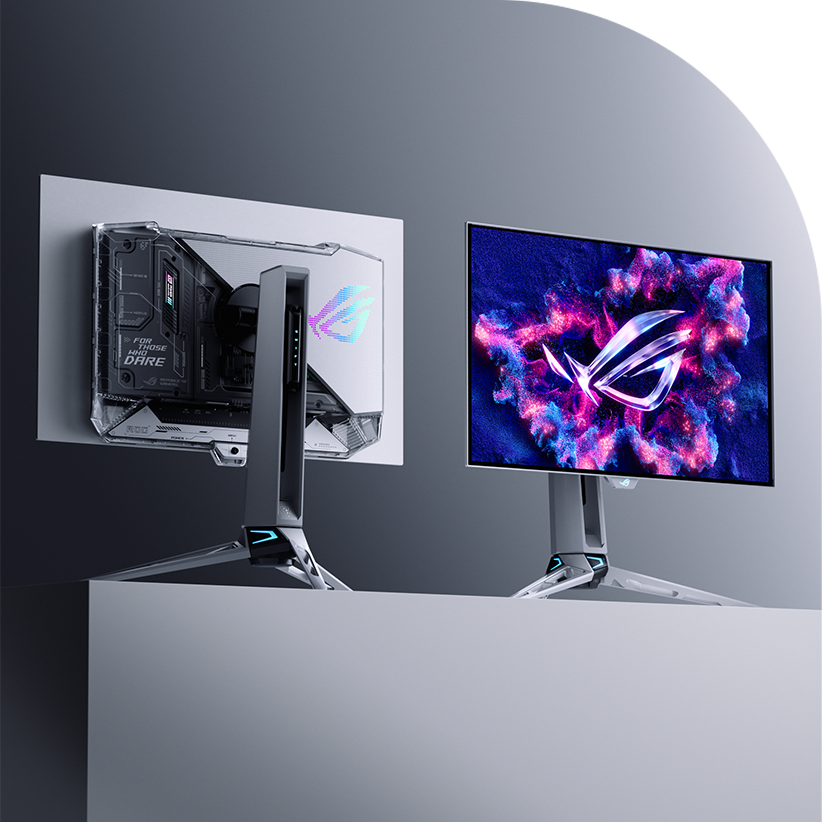
ASUS ROG Swift OLED PG27AQWP-W Review: Who Can Really Feed 540Hz?
A 540 Hz Tandem WOLED with a 720 Hz mode, 1,800 nit HDR peaks and a glossy coat. We explain who has the frame rates for it, what the dual mode is worth and why $1,099 is a specialist price.
The verdict
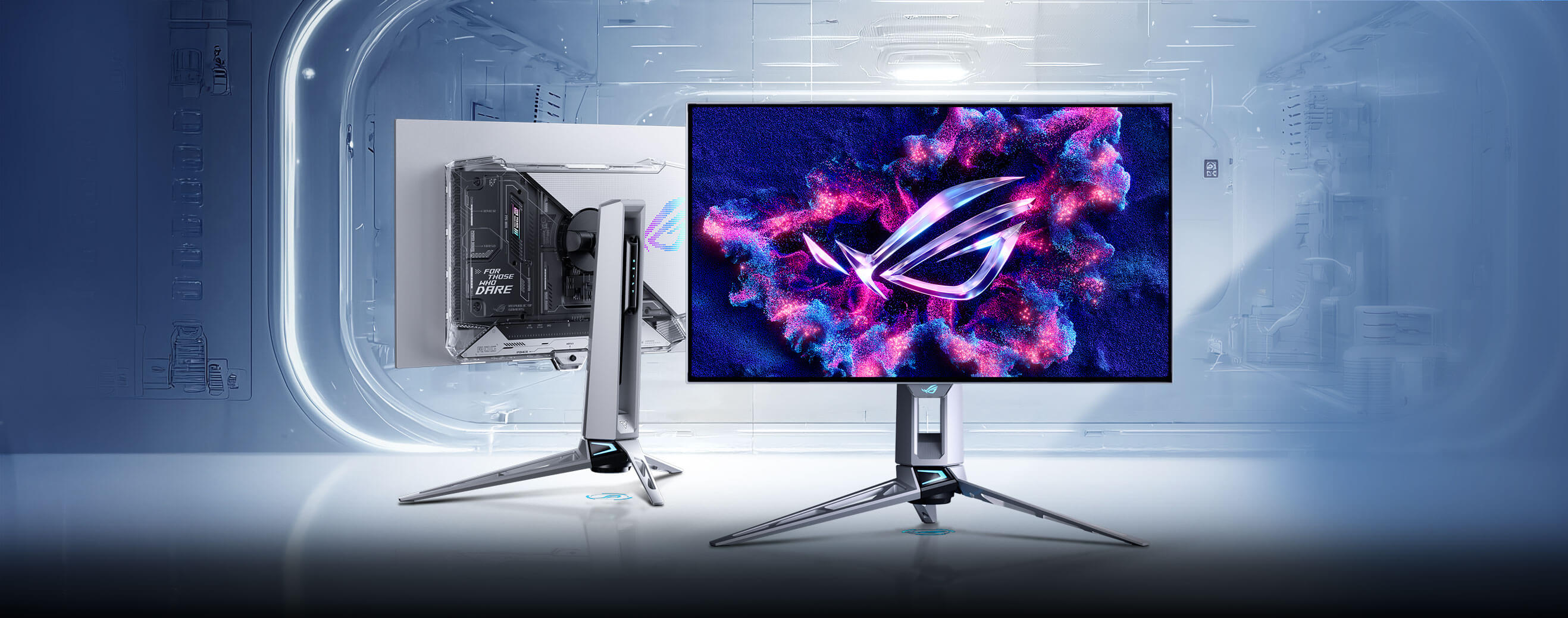
The best-moving OLED we know of, and a pure esports tool. A fourth-generation Tandem WOLED gives 540 Hz at 1440p, a brighter HDR peak of about 1,800 nits in TFTCentral's test and a clean glossy finish, backed by a three-year burn-in warranty. At $1,099 it asks you to have frame rates few games reach, and it lacks USB-C, KVM and a matte option.
Best forCompetitive shooter players pushing several hundred fps
What we liked
- 540 Hz at 1440p with very fast OLED response and low display lag
- Tandem WOLED measured 632 nits SDR and 1,801 nits HDR peak white
- DisplayPort 2.1a UHBR20 and HDMI 2.1 with cables included
- Three-year warranty that covers burn-in, plus a proximity sensor
- RGWB sub-pixels give sharper text than older WOLED screens
What we did not
- $1,099 is hard to justify unless you reach 400 fps or more
- Glossy TrueBlack coat reflects bright rooms and has no matte option
- No USB-C, KVM switch or picture-in-picture
- The 720 Hz dual-mode drops the picture to a very low resolution
- Uniform Brightness caps SDR at 381 nits, so the headline figure needs it off
Start with the number nobody can ignore. 540 Hz at 1440p means a new frame every 1.85 milliseconds, and your PC has to make 540 of them every second for the monitor to be worth the money. Most people reading this cannot do that in most games. Some can do it in the games that matter to them, and for those players the PG27AQWP-W is the first OLED that justifies its price with something other than looks.
Who can actually feed 540 Hz
Be honest with yourself first. Counter-Strike 2, Valorant, Rocket League and Overwatch on low settings, with a fast CPU and a recent graphics card, can go very high. Open-world games and anything with ray tracing will not come near 540 frames at 1440p, whatever card you own. At 120 or 200 fps this monitor is a very good OLED, and cheaper OLEDs will show you very similar pictures.
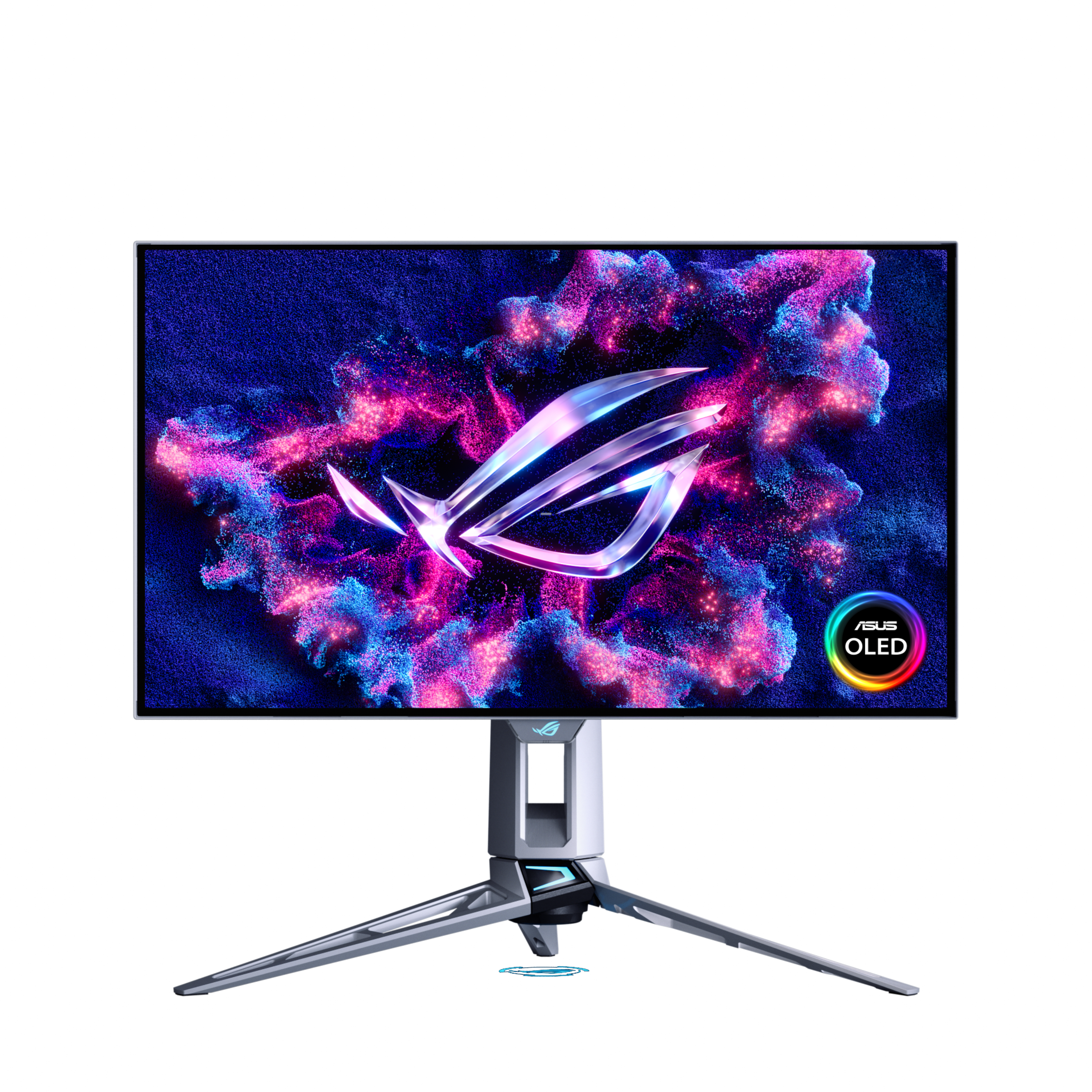
There is also a second mode. ASUS calls it dual-mode: 1440p at 540 Hz, or a 720p picture at 720 Hz. TFTCentral called the resolution in that mode extremely low and likely niche. It is a trick for a handful of players who prefer a tiny picture in exchange for another 180 frames.
What the Tandem panel buys you
The PG27AQWP-W uses a fourth-generation Tandem WOLED panel, which stacks two emissive layers. ASUS claims 15 percent higher peak brightness, 25 percent larger colour volume and 60 percent longer lifespan than the previous generation, and it lists 1,500 cd/m² peak HDR brightness.
Independent numbers are better. TFTCentral measured 632 nits of SDR brightness with the Uniform Brightness option off, and 1,801 nits peak white in HDR on a 1 percent window. Turn Uniform Brightness on and SDR sits at a steady 381 nits with no brightness shifts, which is the setting most desk users should pick.
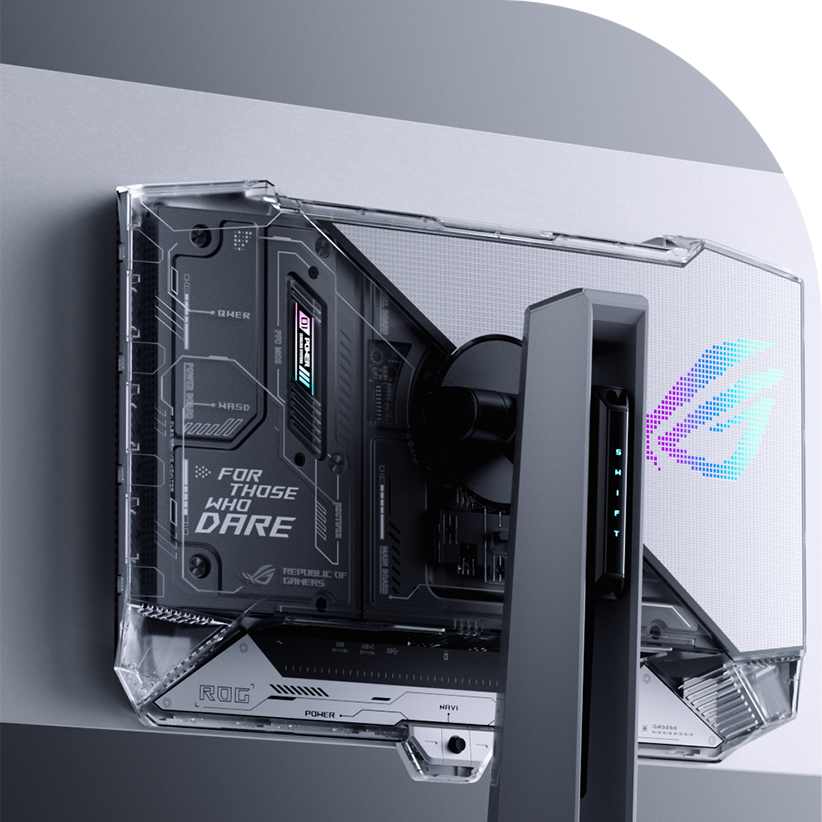
Text is better than on older WOLED screens. TFTCentral noted an RGWB sub-pixel layout at 110 PPI that is sharper than the previous RWBG arrangement, though the white sub-pixel still stops it matching an ordinary LCD for small text.
Specs
- Panel
- Tandem WOLED, 26.5 inch viewable, glossy TrueBlack
- Resolution
- 2560 x 1440, 110 PPI, RGWB sub-pixel layout
- Refresh rate
- 540 Hz native, 720 Hz dual-mode at 720p
- Response time
- 0.02 ms (ASUS, GTG)
- HDR
- DisplayHDR 500 True Black, 1,500 nit rated, 1,801 nit measured peak
- SDR brightness
- 632 nits max, 381 nits in Uniform Brightness (TFTCentral)
- Colour gamut
- 99.7 percent DCI-P3 (TFTCentral)
- Inputs
- DisplayPort 2.1a UHBR20, HDMI 2.1
- Missing
- USB-C, KVM, PiP/PbP
- Adaptive sync
- G-SYNC Compatible, FreeSync Premium Pro
- Warranty
- 3 years including burn-in
- Price
- $1,099